The situation in Bangladesh is such that healthcare disparities are influenced by structural, economic, and social factors and result in unequal health status, especially among the marginalized groups. Although there have been some positive changes in the public health, like the increase in life expectancy and the reduction in the child mortality, the disparity is still high. The major obstacles are the high out-of-pocket (OOP) expenditure that burdens low income households financially and the geographic gap where people in rural areas have limited access to healthcare services. The problem of access to care is also restricted by socio-cultural factors such as gender restrictions and caste-based discrimination that affect the accessibility of women and marginalized communities. Also, the disparities are enhanced by institutional misrecognition and distrust in the healthcare system, a lack of competent professionals, and insufficient healthcare infrastructure. In order to reach the goal of Universal Health Coverage (UHC) and secure the equitable access to healthcare, the policy directions should be aimed at minimizing financial barriers, enhancing service presence in underserved regions, and overcoming socio-cultural and institutional obstacles. The main suggestions would be to increase the coverage of health insurance programs such as Shasthyo Suroksha Karmasuchi (SSK), decentralization of health care services, health literacy and incorporating informal providers into the mainstream health system. By tackling all these issues that are interrelated, a more encompassing healthcare system will be established and lessen the disparities the vulnerable populations encounter in Bangladesh.
Research ArticleHealth DisparitiesIn progress
Health Disparities in Bangladesh: Everyday Barriers to Care and the Social Production of Inequality
Correspondence: jebaanika95@gmail.com
Abstract
Keywords Health equityUniversal health coverageCatastrophic health expenditureBangladeshHealth inequality
1. Introduction
Bangladesh has achieved significant gains in both personal health in the past several decades, in terms of increased life expectancy, improvements in under-five and maternal mortality, as well as the spread of primary healthcare provision (Islam et al., 2023). These developments are, however, accompanied by the continued low levels of per capita health expenditure that is still at the same level of about 0.7 percentage of the Gross Domestic Product (GDP) (Ali Molla, 2021). Although there are positive trends on aggregate health indicators, these averages obscure huge disparities in socioeconomic, demographic and geographic groups (Joarder et al., 2019; Kabir et al., 2018; Mazid & Azam, 2024). Health inequities are still acute, as they influence access to care, quality of service and health outcome, especially in socially and economically disadvantaged groups.
Empirical evidence indicates that geographical location, income level, gender, caste/social group and disability status are major factors causing disparities in health outcomes and service uptake in Bangladesh (Hamiduzzaman et al., 2021; Hossain et al., 2025; T. Rahman et al., 2024). One of the significant structural difficulties is a high rate of catastrophic health expenditure (CHE) that impacts a significant percentage of the population (S. Ahmed et al., 2022; Sarkar et al., 2025). Millions are put into poverty because of high out-of-pocket (OOP) health services due to CHE incurred by approximately a quarter of households per year (S. Ahmed et al., 2022; Joarder et al., 2019). The financial vulnerability is aggravated by the heavy dependency on OOP expenditure as the main mechanism of financing health when such expenditure is relied upon by households with chronic conditions who need long term care (Khan et al., 2017; Md.
M. Rahman et al., 2022; Sheikh et al., 2022). CHE is usually described as spending more than 10 or 25 percentage of the household consumption or income or the household ability-to-pay less subsistence, leading to deteriorated living standards (Awal Chowdhury et al., 2025; Sultana et al., 2017). The need to ensure broad financial coverage under the umbrella of Universal Health Coverage (UHC) is an additional stress that elucidates the ethical necessity to protect the financial life of people in its full extent.
The healthcare costs are also disproportionately borne by the marginalized population, who are faced with compounded social, economic and infrastructural impediments (Akter et al., 2023; Hamiduzzaman et al., 2021, 2022). As an example, rural elderly women tend to have worse health outcomes than their male peers, which is explainable by their poor mobility, marginalization caused by social and economic factors, and limited access to both primary and specialized healthcare (Akter et al., 2023). The historically marginalized occupational communities such as the Dalits are systemically excluded by healthcare services because of social political marginalization, cultural discrimination, and poor economic ability (Kabir et al., 2018). Equally, the citizens of informal urban areas face a disjointed health care approach that is based on an uncoordinated combination of state, commercial, non-governmental or informal health care providers, which frequently leads to irregular and insufficient health care (Chakrabarty, 2023; Hossain et al., 2025; Jahan et al., 2024).
Individuals with disabilities face serious restrictions on access due to insufficiency of infrastructures and financial limitations (Hamid et al., 2025; M. Rahman et al., 2024). Migrant women in urban slums also complain about little support of the state, insecurity of their economy as well as inadequate access to formal sexual and reproductive health care where the cross-cutting of gender, migratory status and poverty are taken into consideration (Jahan et al., 2024).
The majority of the current research is dedicated to determining the individual-level factors of the health disparity e.g. income, education, or gender (Hinata et al., 2024; Molla et al., 2017; Sen et al., 2023). Nevertheless, a fundamental void in the comprehension of how aspects of structure and policy levels intersect with the daily experiences of living to maintain inequities (Hossain et al., 2025; Kabir et al., 2018; Sarkar et al., 2025). The health inequities in Bangladesh are not a difference in results, but rather systematic, preventable, and unfair differences, based on social, political, and economic structures. The theory of the cascade of disadvantage explains how negligible differences in access, quality, or use of services may add up over time, which may lead to significant differences in health outcomes.
This paper hence takes an integrative method to discuss the daily obstacles to accessing healthcare in Bangladesh. It discusses the interaction between social determinants, such as socioeconomic status, gender, caste, disability, and urban-rural inequalities and systemic policies and structural constraints to create embedded health inequities. It is hoped to produce lessons that can guide policy changes and policies to enhance equity and financial safeguards in the health system, which will further the development of UHC and protect the most vulnerable groups (Joarder et al., 2019; Khan et al., 2017; Sheikh et al., 2022). This analysis will align with the aim of going beyond the averageness of health improvements to situate the individual experiences within the wider structural and policy frameworks to drive the multidimensional forces of inequity and foster a more inclusive and fair healthcare system in Bangladesh.
2. Conceptual Framework
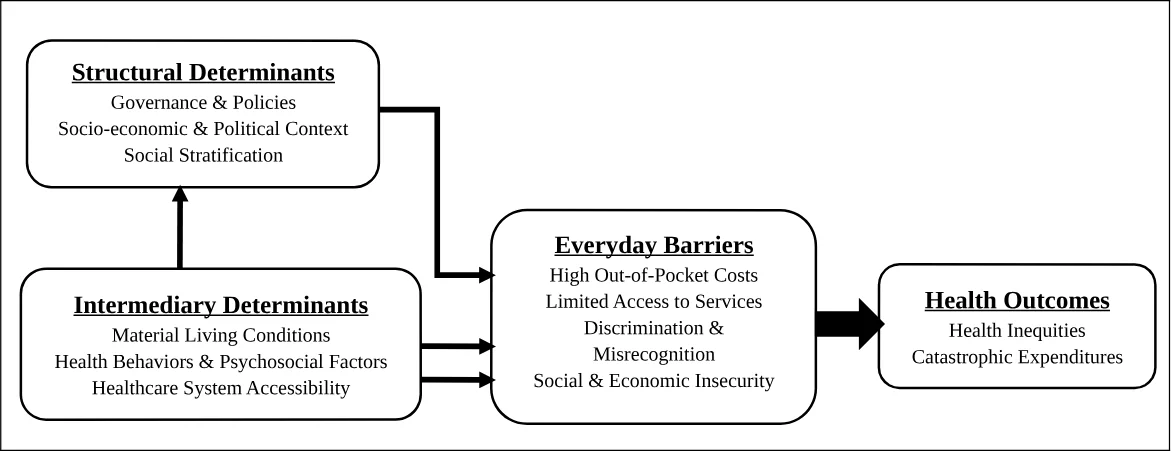
Health inequity in Bangladesh must be understood through a holistic methodology that captures the effect of structural and intermediary factors on health outcomes. The World Health Organization (WHO) Social Determinants of Health (SDH) framework is a powerful analytical tool, as it separates determinants into structural and intermediary dimensions (Joarder et al., 2019). The framework will be useful in the analysis of how the forces of society influence health inequalities and in how daily experiences of the marginalized people intersect with the systemic processes in the broader context (S. Ahmed et al., 2022; Joarder et al., 2019).
Structural determinants are macro-level socioeconomic and political processes that influence the social stratification and determine the position of people or groups in the society (Joarder et al., 2019). These determinants affect health outcomes in an extremely influential way as they dictate the power, resource, and opportunity distribution. These major structural determinants are:
Government and government policies: These are the political, legal, economic, and cultural policies that regulate the distribution of resources in the society (Joarder et al., 2019; Khan et al., 2017). Healthcare financing policies, education, social protection, and welfare policies have a direct impact on health access and outcomes equity (Joarder et al., 2019; Sheikh et al., 2022). In Bangladesh, a combination of low levels of government spending on health and poor social protection mechanisms creates a mass of financial vulnerability especially to marginalized groups.
Socio-economic and political context: The general conditions of the society, such as macroeconomic policies, labor regulations, welfare state provisions and cultural norms, all have an influence on the level of inequality and the social protection the citizens have (Hamid et al., 2025; Joarder et al., 2019). The factors affect economic stability of households, accessibility to basic services, and exposure to health shocks.
Social stratification: Social stratification is the division of people into social positions in terms of income, education, occupation, gender, and ethnicity, among other social identifiers, which define the access of resources and risk exposure of people (Joarder et al., 2019; Kabir et al., 2018) The Dalit community in Bangladesh is an example of marginalized communities and it is not able to access healthcare services because of deeply rooted sociopolitical and cultural cushions (Jahan et al., 2024; Kabir et al., 2018). Social stratification is therefore an important process by which health inequities are created and maintained (Joarder et al., 2019).
The intermediate determinants also act at individual or household level and mediate the impact of structural determinants on the health outcome. These include the immediate factors that have a direct influence on the status of health and access to care, which includes:
Material living conditions: Availability of proper housing, clean water, sanitation, healthy food, and basic facilities are of critical importance to health (Sheikh et al., 2023). There is a high living condition among people in informal urban settlements in Bangladesh which increases their vulnerability to communicable diseases and chronic health hazards (Hossain et al., 2025).
Health behaviors and psychosocial factors: Social environments and material conditions influence the lifestyle, stress, social support, and mental health (Joarder et al., 2019; Sheikh et al., 2023). Socioeconomic disadvantage has a tendency to limit healthy behaviors and increase psychosocial strains with regard to unequal health outcomes.
Access to health care: The accessibility of healthcare services is defined by the presence of availability, affordability, cultural acceptability, and quality of healthcare services to define how well healthcare services are available to the people or not (Hinata et al., 2024; Sheikh et al., 2023). In Bangladesh, out-of-pocket spending, geographical distance, and disjointed service delivery are the limiting factors to healthcare access especially among the rural communities, the urban poor, and the disabled persons (Hossain et al., 2025; T. Rahman et al., 2022, 2024). An example of compounded barriers experienced by rural elderly women is correlated health and social vulnerability (Hamiduzzaman et al., 2021). Individuals with disabilities are not an exception as they experience poor infrastructure and insufficient funds (M. Rahman et al., 2024; Md. M. Rahman et al., 2022).
Critical social theory can be useful in developing the insights used to gain a better understanding of how these determinants can be converted into day-to-day barriers. The idea of emancipation by Habermas focuses on the involvement of inclusivity in health decision making procedures (Joarder et al., 2019; Khan et al., 2017). The marginalization of the poor in the policy consultations and planning maintains inequalities since the policies do not capture their needs and therefore they are susceptible to the systemic disadvantages.
The theory of recognition by Honneth can be viewed as a complement to this view because it emphasizes the end results of institutional misrecognition (Hossain et al., 2025; Kabir et al., 2018; M. Rahman et al., 2024). Failure by the healthcare systems to recognize the cultural peculiarities, particular health requirements, or even inherent dignity of the marginalized groups, like Dalit communities, urban poor, or individuals with disabilities, leads to discriminatory practices, services which are culturally insensitive, and reduced trust in healthcare systems (Hossain et al., 2025; Kabir et al., 2018). Its daily implications are disrespect by the providers, services that fail to meet special vulnerabilities, and neglect that perpetuate health disparities (Kabir et al., 2018; M. Rahman et al., 2024).
These are the most crucial social theories that jointly contextualize the structural and intermediary determinants in the relations of power, social justice, and human dignity. They show that what on an individual level, and occasional misfortunes, can be seen as obstacles to healthcare access are actually systemic failures caused by unequal involvement and institutional misrecognition (Joarder et al., 2019; Sheikh et al., 2023). With SDH combined with the perspectives of Habermas and Honneth, the conceptual framework will highlight the necessity to introduce the transformative policy responses to both structural inequalities and lived experiences of deprived populations to advance equitable access to healthcare and to enhance the movement toward the Universal Health Coverage (UHC) (Joarder et al., 2019).
3. Methods
3.1 Research Design
The evidence synthesis method was used in this study where quantitative data analysis of the national level was combined with qualitative data analysis of cases. The mixed-method design enabled a holistic perspective on the issue of health disparities by allowing measurement of the trends on the population level as well as individualized experiences of the marginalized groups in gaining access to healthcare. This method enables the study of systemic trends and placing these trends into the real-life experiences of the vulnerable communities.
3.2 Data Sources
The study used numerous representative valid and qualitative data nationally to be sure and triangulate the results. The sources of quantitative data were mass national surveys (demographic and health survey, household income, and household expenditure pattern, several social and health indicators, and so on). Qualitative data were found through peer-reviewed research material related to the experience of various communities, such as rural communities, informal urban, and settlements, old women, marginalized social groups, and people with disabilities. The fact that these sources of data were combined gave breadth and depth to the perspective of health disparities as related to structural and intermediary factors.
3.3 Analytical Strategy
The analysis was in a thematic format based on the Social Determinants of Health. It was divided into a number of steps. To identify structural determinants, first, the mapping of macro-level socioeconomic and political factors which precondition access to health services and affect health equity was performed. Second, systematically coded based on both quantitative indicators and qualitative narratives, intermediary determinants, such as material conditions, health behaviors, and access to the healthcare system, were coded. Third, thematic categorization of everyday healthcare barriers was done, which emphasized the interaction between structural constraints, intermediary factors and lived experiences. This systematic methodology made it possible to identify the patterns that occurred repeatedly, the differences between the groups of the population, and the mechanisms that contribute to the injustices in access to, and in, healthcare.
3.4 Ethical Considerations
The data used in the study was publicly available information and the qualitative researches that had been published before, which fulfilled the ethical requirement of secondary data analysis. No individual data gathering was to be done and all analysis was to be done on an aggregate basis and this would ensure that individual privacy is not compromised. A combination of already existing sources of data facilitated the process of conducting the research without any interaction with the respondents at all and provided methodological rigor and the protection of ethics.
4. Results
4.1 Economic Barriers
One problem with healthcare access in Bangladesh is the use of out-of-pocket (OOP) payments, which constitute about 67-74 of the total healthcare expenditures. This dependency on OOP payments is a pro-rich gradient that is more harmful to the poor populations who are unable to access preventive care services. As an illustration, such basic services as hypertension screening and maternal care are more accessible to more affluent people who can afford the financial cost.
OOP spending has the potential to increase health disparities by deterring people with low income to pursue preventive care due to the financial burden of this expense. This leads to increased prevention and complications in the long run to the poor who are unable to obtain early interventions because of financial constraints. Moreover, catastrophic health expenditure (CHE) is a common vice, which pushes most poor households into more poverty. Research indicates that CHE drives one out of every four households into a financially strained situation every year, and this goes to show the harsh effects of the current healthcare financing regime on economic prosperity.
Table 1. OOP Spending and its Impact on Healthcare Access
| Service Type | Proportion of Costs Covered by OOP (%) | Impact on Access by Income Group |
|---|---|---|
| Hypertension Screening | 70-75% | Higher access among the wealthier |
| Maternal Care | 65-70% | Limited access for the poor |
| Preventive Care | 67-74% | High financial burden on low-income groups |
| Catastrophic Expenditure | 25-30% | Pushes poor households into poverty |
As the table shows, the OOP spending is directly correlated with the inequalities in access to services, and the poor population groups have a disproportionate burden of healthcare expenses.
4.2 Geographic and Physical Barriers
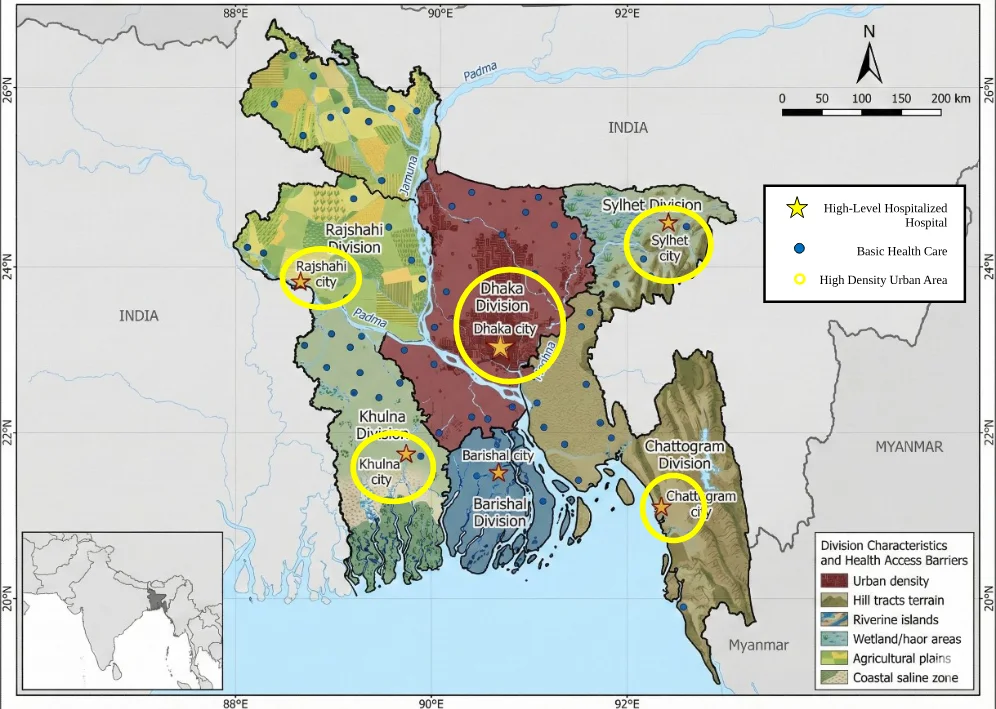
The other serious issue is geographic inequalities in healthcare access. The rural populations also encounter considerable obstacles as a result of inadequate health infrastructure that would go a long way in obstructing access to quality care. These issues are even aggravated by poor road networks and absence of transport which can be trusted. Health care facilities in the rural set-up are poorly staffed and equipped as well as they are in remote locations that cannot be accessed easily by people who may need to consult health care facilities early enough.
Furthermore, the specialized healthcare services are largely being concentrated on the urban centers, which means that the rural population does not have much access to specialized healthcare services. This urban-rural gap does not only affect accessibility to services, but also quality of services because the urban healthcare providers have better resources and infrastructures.
The figure shows the imbalance in healthcare facilities in cities and rural regions. It brings to focus the concentration of specialized services in cities and absence of basic healthcare in the rural areas limiting access to rural populations.
4.3 Socio-Cultural Barriers
Gender and Autonomy
Discrimination in healthcare is based on gender, and women tend to be limited in their capability to make independent healthcare choices. Women are often expected to get male accompaniment at the time of seeking care particularly in sexual and reproductive care due to the cultural norms and expectations. These prohibitions reduce the freedom that women have and lead to health care that is tolerated or even not taken, and which may have long-term health effects.
Caste-Based Exclusion
Another major obstacle is the issue of caste-based discrimination, especially among the disadvantaged groups such as the Dalit community. Such people tend to be excluded by the formal healthcare systems because of deeply rooted stigmas in the society. Moreover, most of these communities self- exclude themselves to care because they are afraid of being discriminated or maltreated which adds to their health inequity.
Table 2. Socio-Cultural Barriers in Healthcare Access
| Barrier Type | Affected Group | Impact on Healthcare Access |
|---|---|---|
| Gender and Autonomy | Women | Restrictions on decision-making, need for male accompaniment |
| Caste-Based Exclusion | Dalit Communities | Social stigma and self-exclusion, discrimination in care |
The table presents a summary of the major socio-cultural barriers and effects, citing how different cultural norms and caste-based discrimination deter the accessibility of required healthcare services.
4.4 Structural Health System Constraints
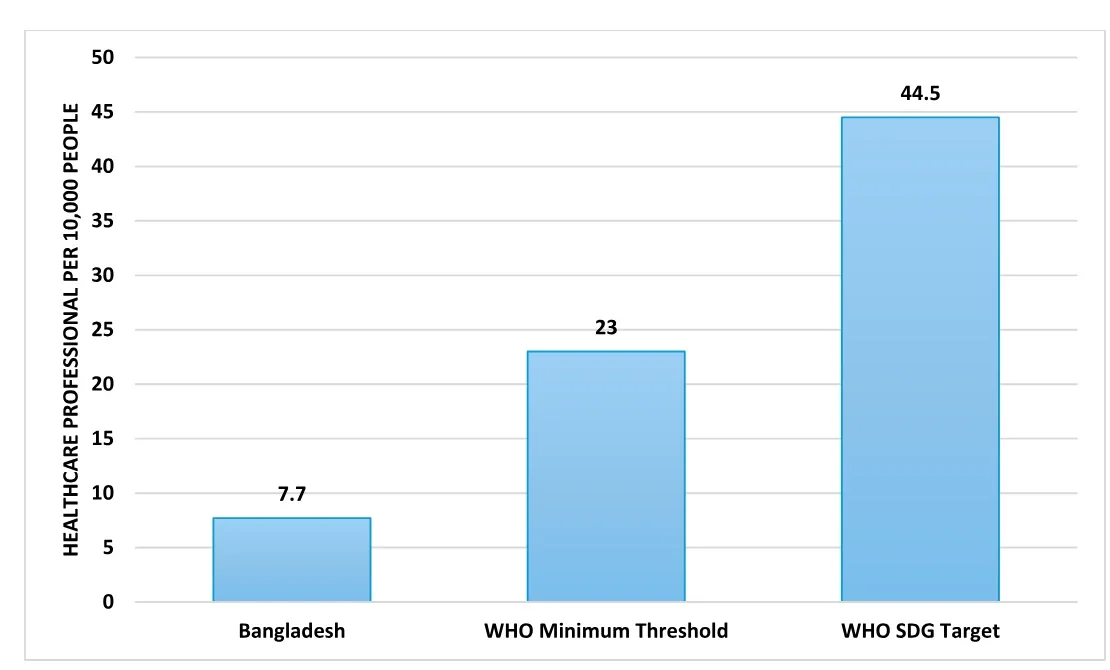
The healthcare system has structural barriers that can facilitate available disparities especially to marginalized populations. Healthcare professionals are in critically short supply and the number of skilled professionals is at 7.7 per 10,000 individuals, which is significantly lower than the world average. This deficit has a great impact on the quality and availability of care particularly in rural regions where people are more, and the need of services is more.
Also, there is an acute shortage of specialized geriatric care services. The Bangladesh population is aged; this population has growing health needs; however, the healthcare system is poor to meet health needs. The shortage of trained health practitioners and the unfavorable infrastructure to accommodate the older population is a factor that has been adding to the widening healthcare disparity.
Figure 3 shows that the shortage of health practitioners is critical in Bangladesh as compared to international standards. The disparity in the present density of skilled health workers in Bangladesh (7.7 per 10,000 people) and the minimum recommended by the World Health Organization (WHO) (23.0) and SDG (44.5) can be seen in the bar chart. It measures the ratio of healthcare providers to the 10,000 population in Bangladesh to the global standards. Further illustrating the structural constraints to healthcare access, As well also shows that the current level of workforce density in Bangladesh is significantly less than it needs to be in order to provide universal health coverage.
5. Discussion
5.1 Institutional Misrecognition
The healthcare system experiences institutional misrecognition which worsens health inequalities especially among marginalized populations. Maternal and child health are usually a priority in the policies whereas the elderly women and other vulnerable groups are not taken into account. The barriers to care among the elderly women are compounded among old women particularly in rural regions by inaccessibility to geriatrics, finances and cultural care (Akter et al., 2020; Jindal et al., 2023). This systemic neglect creates a disadvantage cycle in which the groups have worse health outcomes and increased barriers to care access which further marginalizes them in the health system. This misidentification is supported by structural disparities, including the gender and age bias of healthcare policies, which leaves many women and older people without proper care (Braveman et al., 2022; Garnett et al., 2025; UNFPA SUPPLEMENT, 2016)
5.2 Poverty–Illness Feedback Loop
There is a cyclic relationship between poverty and illness, with the socioeconomic deprivation increased susceptibility to chronic disease, and vice versa, decreasing the capability to seek and use healthcare services. In Bangladesh, the feedback loop mostly affects low-income families, as the financial assets restrict access to both preventive and continuous treatment of chronic illnesses such as hypertension, diabetes, and cardiovascular disease (O’Donnell, 2024; Sapkota et al., 2021). This means that people living in these households are exposed to aggravated health conditions, which are not effectively dealt with in time and hence deterioration of their health status and increased financial pressure. This cycle is among the causes of the inequalities in the health of the nation since people with a disadvantaged background cannot afford the services they need, and this situation triggers both ill-health and poverty (Majumder & Biswas, 2018; Spooner, 2021).
5.3 Health System Mistrust and Informal Care
Several marginalized populations consider informal providers because of health system mistrust by long queues, perceived discrimination, and poor provider attitudes. Healthcare in Bangladesh, especially the rural regions, does not tend to match the expectations of these groups, thus leading to the discontent with the formal care services (M. Ahmed, 2022; Sarker et al., 2016). People react to this by seeking more culturally relevant, accessible, and affordable alternatives in the form of informal providers, e.g. the traditional healers or community health workers. Although informal providers significantly contribute to the provision of healthcare, they are not usually controlled, standardized, and assured of quality, thereby increasing health risks of vulnerable populations (Anwar, 2009).
5.4 Implications for Universal Health Coverage
Universal Health Coverage (UHC) policies have a noble aim of creating equal access to healthcare but without targeted interventions, they cannot help to address the structural health disparities in Bangladesh. Universal policies are absolutely necessary, yet focused attention should be paid to the marginalized population groups and the inclusion and equity of healthcare systems (Joarder et al., 2019; Mohoshin & Akter, 2021). They should also focus on enhancing accessibility within rural regions, economic barriers to care, and educating healthcare professionals to be aware of the special needs of the disadvantaged groups. In the absence of such specific interventions, the policies of UHC can become a cause of further disparity due to the inability to reach those who need it the most (Joarder et al., 2019; Khatun et al., 2025).
5.5 Policy Implications
This study revealed that some policy suggestions could be useful in reducing the obstacles to accessing healthcare and managing health disparities in Bangladesh. To change the situation, first, it is possible to increase the coverage of the Shasthyo Suroksha Karmasuchi (SSK) that is a health insurance system aimed at low-income groups and will help to decrease the number of households that spend a lot of money on health services and ensure that at-risk populations will not spend their funds on healthcare catastrophically. Furthermore, female education and health literacy need to be strengthened, and it has been proved to enhance the health outcomes and enable women to make better informed healthcare choices.
Decentralization of health planning and resource distribution to underserved areas would guarantee greater access to services by the rural people with a solution that is specific to the needs of the area. Lastly, establishing informal healthcare providers in the national health monitoring system might help to improve the quality of care provided in general as well as health monitoring and make sure that informal healthcare providers are able to meet the national standards. The given policy recommendations offer feasible ways to overcome the obstacles that were revealed in the present study and offer the roadmap to a more fair healthcare system in Bangladesh. Their performance however will be determined by good political will, partnership among stakeholders and continued monitoring and evaluation of their performance so as to make sure that the needs of the marginalized population are effectively addressed.
6. Limitations
Although it is possible to note that this research offers great things about challenges to healthcare access in Bangladesh, it has a number of limitations that need to be acknowledged.
Reliance on Secondary Datasets
Primary data sources used in this study were secondary sources such as national surveys and already existing qualitative studies. Although these datasets are very insightful, and have a broad and large-scale perspective, their dependency presents some constraints associated with the consistency and completeness of the data. By definition, secondary data is not always able to reflect the most up-to-date or area-specific health trends, and not all the variables of interest might be well represented, including personal-level experiences of marginalized groups. Also, the data presented in various sources might have varying quality and degree, and it might affect the strength of the results.
Limited Representation of Certain Marginalized Populations
Even though some attempts to cover diverse populations were made, some of the marginalized groups might be underrepresented in the datasets applied in this study. To give an example, remote rural population, people in extreme poverty, and some indigenous or ethnic minorities might not have been sufficiently captured. Such populations have usually got special barriers to healthcare that might not be well represented by the available data, and this might restrain the generalization of the study findings to the most vulnerable groups in society.
Cross-Sectional Nature of Survey Data
The data provided in this study is in the form of cross-sectional surveys, so it is not possible to make any inferences on causality. Although it is clear that healthcare access is associated with a number of determinants, the directionality of these associations cannot be easily determined since it is not possible to follow the trends across time. To take an example, one may have a hard time determining whether poor health outcomes can be caused by financial barriers or poor health outcomes increase financial insecurity. We should use longitudinal data that would be more effective to capture these dynamics and give a better picture of the causal processes that are involved in the situation.
7. Conclusion
The problem of healthcare inequality in Bangladesh is very multifactorial and is strongly shaped by structural social determinants, economic barriers, and institutional constraints. This research study identifies the importance of social stratification in providing unequal access to the healthcare services on the basis of income, gender, age, and geographic location, thus creating considerable disparities to the health outcomes. The allocation of healthcare resources is dictated by structural factors such as governance, public policies and socio-economic environments and are a major contributor to inequality. The fact that out-of-pocket spending that makes up a huge percentage of health care financing can be used in this country further enhances economic barriers and imposes a great burden to low-income families. The existence of devastating health spending exacerbates this financial burden and pushes vulnerable groups into poverty and exacerbates the general health conditions.
The economic barriers are not the only causes of healthcare inequality. Geographic and physical factors: The lack of the healthcare infrastructure in rural communities and the centralization of specialized services in cities pose a big gap in healthcare provision. Such infrastructure and service provision gaps are vital aspects in the disparate access to healthcare. The rural residents, the aged women, and the disabled persons have multiplied challenges in receiving the healthcare services, as a result of poor healthcare facilities, distance, and the poor nature of the roads.
In addition, there are socio-cultural issues of gender and caste based exclusion that further complicate the access to healthcare in Bangladesh. Gendered norms tend to deny women the freedom to decide on their healthcare, and caste-based discrimination, especially against the marginalized such as Dalits, further demarcates them to the category of people who have no access to access essential healthcare services. These socio-cultural obstacles are some of the factors that lead to the high mistrust of formal healthcare systems as many marginalized groups resort to seeking care of informal providers, who may provide more culturally sensitive and accessible health care, at the price of quality and safety.
Other institutional constraints faced by the health system that contribute to the provision of equitable healthcare include lack of skilled healthcare practitioners and lack of specialized services especially to the aging populations. As there are few healthcare providers per capita and geriatric services are not provided, the healthcare system of Bangladesh is not well prepared to address the various needs of its people, particularly those living in underprivileged areas.
Policies should not rest on the expansion of healthcare access only in order to attain health equity. To make a step in the right direction, a complex solution must be adopted, which will not only tackle the systemic obstacles affecting the marginalized groups but also the individual obstacles they encounter in their daily lives. To begin with, the concerted effort should be put to enhance the wider social determinants of health. This involves dealing with poverty, education, housing and employment in relation to which care access is unequivocal. Also, it is necessary to enhance the governance and the policy of the country to focus on the interests of the marginalized population and make sure that healthcare resources are distributed fairly and disadvantaged populations are not forgotten.
The policy interventions must be directed at alleviating financial constraints through raising the level of government investment in health insurance programs, including the expansion of the programs such as the Shasthyo Suroksha Karmasuchi (SSK) in protection of low-income households against disastrous health spending. Any attempt to empower women through education and health literacy is also essential because women can make informed decisions regarding their healthcare and minimize gender-based disparities. In addition, healthcare planning can be decentralized to concentrate on underserved areas, especially rural areas to ensure the even distribution and accessibility of healthcare infrastructure. Incorporation of informal providers into the national healthcare monitoring system may also boost service delivery meaning that even those who depend on non-formal sources of care are served quality services which are in tandem with the national standards.
Finally, as much as there has been an improvement in the overall health indicators in Bangladesh, it has not been evenly distributed among all the parts of the society. It will require all-inclusive and wholesome policy changes to reach the goal of health equity. Addressing the structural and daily obstacles to healthcare, enhancing governance, and focusing on the needs of disadvantaged people in the health sector will be key steps to developing universal health coverage and making sure that all of the citizens will receive the care they require irrespective of their socio-economic status, gender, or geographic location.
Reference
Ahmed, M. (2022). UNEQUAL ACCESS TO HEALTH CARE FACILITIES AND ITS IMPACT ON ACHIEVING SUSTAINABLE DEVELOPMENT GOALS: BANGLADESH PERSPECTIVE. Journal of Community Positive Practices, 22(2), 120–144. https://doi.org/10.35782/JCPP.2022.2.09
Ahmed, S., Ahmed, M. W., Hasan, M. Z., Mehdi, G. G., Islam, Z., Rehnberg, C., Niessen, L. W., & Khan, J. A. M. (2022). Assessing the incidence of catastrophic health expenditure and impoverishment from out-of-pocket payments and their determinants in Bangladesh: Evidence from the nationwide Household Income and Expenditure Survey 2016. International Health, 14(1), 84–96. https://doi.org/10.1093/inthealth/ihab015
Akter, S., Azad, T., Rahman, Md. H., & Raihan, Md. F. (2023). Morbidity Patterns and Determinants of Healthcare-Seeking Behavior Among Older Women in Selected Rural Areas of Bangladesh. Dr. Sulaiman Al Habib Medical Journal, 5(3), 70–79. https://doi.org/10.1007/s44229-023-00033-2
Akter, S., Davies, K., Rich, J. L., & Inder, K. J. (2020). Barriers to accessing maternal health care services in the Chittagong Hill Tracts, Bangladesh: A qualitative descriptive study of Indigenous women’s experiences. PLOS ONE, 15(8), e0237002. https://doi.org/10.1371/journal.pone.0237002
Ali Molla, A. (2021). An Overview of Bangladesh Health Systems Financing. Eastern Journal of Healthcare, 1(1), 37–38. https://doi.org/10.31557/ejhc.2021.1.1.37-38
Anwar, I. (2009). Perceptions of Quality of Care for Serious Illness at Different Levels of Facilities in a Rural Area of Bangladesh. Journal of Health, Population and Nutrition, 27(3), 396–405. https://doi.org/10.3329/jhpn.v27i3.3382
Awal Chowdhury, N. M. R., Urme, S. A., Hridoy, A., Nusrat, F., & Miah, M. S. (2025). Exploring the effects catastrophic health expenditure due to non-communicable diseases and coping strategies: A case study among households in Bangladesh. Public Health in Practice, 10, 100642. https://doi.org/10.1016/j.puhip.2025.100642
Braveman, P. A., Arkin, E., Proctor, D., Kauh, T., & Holm, N. (2022). Systemic And Structural Racism: Definitions, Examples, Health Damages, And Approaches To Dismantling: Study examines definitions, examples, health damages, and dismantling systemic and structural racism. Health Affairs, 41(2), 171–178. https://doi.org/10.1377/hlthaff.2021.01394
Chakrabarty, K. (2023). Exploring the Factors Affecting Health Outcomes among Urban Poor Communities in Bangladesh. Journal of Community Health Provision, 3(1), 20–26. https://doi.org/10.55885/jchp.v3i1.213
Garnett, A., Sangrar, R., Oleynikov, C., Gerstle, D., & Connelly, D. (2025). Structural marginalization of older adults within health care settings: A concept analysis. BMC Geriatrics, 26(1), 113. https://doi.org/10.1186/s12877-025-06572-7
Hamid, A., Parvin, L., Ahmed, S. T., & Akter, S. (2025). Exploring the Socio-Economic Challenges and Daily Life of Persons with Disabilities Insights from Mehendiganj Upazila: A Case Study Approach. Journal of Knowledge Learning and Science Technology ISSN: 2959-6386 (Online), 4(1), 13–19. https://doi.org/10.60087/jklst.v4.n1.002
Hamiduzzaman, M., De Bellis, A., Abigail, W., & Kalaitsidis, E. (2022). Health Services Utilization Barriers for Rural Elderly Women in Bangladesh: Narratives of Clinicians, Pharmacists and Public Health Assistants. Journal of Cross-Cultural Gerontology, 37(4), 407–426. https://doi.org/10.1007/s10823-022-09465-z
Hamiduzzaman, M., De Bellis, A., Abigail, W., Kalaitzidis, E., & Harrington, A. (2021). The World Is Not Mine – Barriers to Healthcare Access for Bangladeshi Rural Elderly Women. Journal of Cross-Cultural Gerontology, 36(1), 69–89. https://doi.org/10.1007/s10823-020-09420-w
Hinata, H., Lwin, K. S., Eguchi, A., Ghaznavi, C., Hashizume, M., & Nomura, S. (2024). Factors associated with barriers to healthcare access among ever-married women of reproductive age in Bangladesh: Analysis from the 2017–2018 Bangladesh Demographic and Health Survey. PLOS ONE, 19(1), e0289324. https://doi.org/10.1371/journal.pone.0289324
Hossain, M. R., Georgi, N. W., Noor, F. M., Aktar, B., Karki, J., Jahan, Mst. N., Theobald, S., & Rashid, S. F. (2025). Healthcare in the Margins: A Qualitative Study of Healthcare Access and Utilization in Bangladesh’s Informal Urban Settlements. Journal of Urban Health, 102(6), 1298–1309. https://doi.org/10.1007/s11524-025-01042-2
Islam, S. M. S., Uddin, R., Das, S., Ahmed, S. I., Zaman, S. B., Alif, S. M., Hossen, M. T., Sarker, M., Siopis, G., Livingstone, K. M., Mehlman, M. L., Rahman, Md. M., Chowdhury, R. I., Alim, Md. A., Choudhury, S. R., Ahmed, S. M., Adhikary, R. K., Anjum, A., Banik, P. C., … Naghavi, M. (2023). The burden of diseases and risk factors in Bangladesh, 1990–2019: A systematic analysis for the Global Burden of Disease Study 2019. The Lancet Global Health, 11(12), e1931–e1942. https://doi.org/10.1016/S2214-109X(23)00432-1
Jahan, I., Vuckovic, M., Sara Kabir, S., Rashid, S. F., & Bouey, J. (2024). Reproductive health service access and utilisation among migrant women in Dhaka’s urban slums: A qualitative study. Culture, Health & Sexuality, 26(9), 1134–1148. https://doi.org/10.1080/13691058.2024.2302052
Jindal, M., Chaiyachati, K. H., Fung, V., Manson, S. M., & Mortensen, K. (2023). Eliminating health care inequities through strengthening access to care. Health Services Research, 58(S3), 300–310. https://doi.org/10.1111/1475-6773.14202
Joarder, T., Chaudhury, T. Z., & Mannan, I. (2019). Universal Health Coverage in Bangladesh: Activities, Challenges, and Suggestions. Advances in Public Health, 2019, 1–12. https://doi.org/10.1155/2019/4954095
Kabir, A., Maitrot, M. R. L., Ali, A., Farhana, N., & Criel, B. (2018). Qualitative exploration of sociocultural determinants of health inequities of Dalit population in Dhaka City, Bangladesh. BMJ Open, 8(12), e022906. https://doi.org/10.1136/bmjopen-2018-022906
Khan, J. A. M., Ahmed, S., & Evans, T. G. (2017). Catastrophic healthcare expenditure and poverty related to out-of-pocket payments for healthcare in Bangladesh—An estimation of financial risk protection of universal health coverage. Health Policy and Planning, 32(8), 1102–1110. https://doi.org/10.1093/heapol/czx048
Khatun, F., Kamal, M., Kabir, F. A., & Huq, P. K. (2025, April 29). Ensuring Universal Health Coverage through Primary Healthcare Services in Bangladesh | CPD. Centre for Policy Dialogue (CPD). https://cpd.org.bd/publication/ensuring-universal-health-coverage-through-primary-healthcare-services-in-bangladesh/
Majumder, S., & Biswas, S. C. (2018). Health and Socio-economic Implications of Poverty in Bangladesh. European Scientific Journal, ESJ, 14(29), 301. https://doi.org/10.19044/esj.2018.v14n29p301
Mazid, Md. A., & Azam, Dr. Md. G. (2024). Health Equity in Bangladesh: A Comparative Review and Recommendations for Policy and Practice. SSRN Electronic Journal. https://doi.org/10.2139/ssrn.4726520
Mohoshin, A., & Akter, S. (2021). UNIVERSAL HEALTH COVERAGE: AN ANALYSIS OF ALTERNATIVE POLICY FOR HEALTH CARE SPENDING IN BANGLADESH. Journal of Community Positive Practices, 21(2), 46–68. https://doi.org/10.35782/JCPP.2021.2.04
Molla, A. A., Chi, C., & Mondaca, A. L. N. (2017). Predictors of high out-of-pocket healthcare expenditure: An analysis using Bangladesh household income and expenditure survey, 2010. BMC Health Services Research, 17(1), 94. https://doi.org/10.1186/s12913-017-2047-0
O’Donnell, O. (2024). Health and health system effects on poverty: A narrative review of global evidence. Health Policy, 142, 105018. https://doi.org/10.1016/j.healthpol.2024.105018
Rahman, M., Rana, M. S., Rahman, M. M., & Khan, M. N. (2024). Healthcare services access challenges and determinants among persons with disabilities in Bangladesh. Scientific Reports, 14(1), 19187. https://doi.org/10.1038/s41598-024-70418-2
Rahman, Md. M., Islam, Md. R., Rahman, Md. S., Hossain, F., Alam, A., Rahman, Md. O., Jung, J., & Akter, S. (2022). Forgone healthcare and financial burden due to out-of-pocket payments in Bangladesh: A multilevel analysis. Health Economics Review, 12(1), 5. https://doi.org/10.1186/s13561-021-00348-6
Rahman, T., Gasbarro, D., & Alam, K. (2022). Financial risk protection against noncommunicable diseases: Trends and patterns in Bangladesh. BMC Public Health, 22(1), 1835. https://doi.org/10.1186/s12889-022-14243-0
Rahman, T., Gasbarro, D., Alam, K., & Alam, K. (2024). Rural‒urban disparities in household catastrophic health expenditure in Bangladesh: A multivariate decomposition analysis. International Journal for Equity in Health, 23(1), 43. https://doi.org/10.1186/s12939-024-02125-3
Sapkota, T., Houkes, I., & Bosma, H. (2021). Vicious cycle of chronic disease and poverty: A qualitative study in present day Nepal. International Health, 13(1), 30–38. https://doi.org/10.1093/inthealth/ihaa016
Sarkar, M. A. R., Jalal, M. J. E., Ding, S., Begum, I. A., Yang, B., & Alam, M. J. (2025). Determinants of Catastrophic Health Expenditure and Its Impact on Poverty in Deltaic Country: Evidence From Bangladesh. Sustainable Development, 33(4), 5414–5435. https://doi.org/10.1002/sd.3415
Sarker, B. K., Rahman, M., Rahman, T., Hossain, J., Reichenbach, L., & Mitra, D. K. (2016). Reasons for Preference of Home Delivery with Traditional Birth Attendants (TBAs) in Rural Bangladesh: A Qualitative Exploration. PLOS ONE, 11(1), e0146161. https://doi.org/10.1371/journal.pone.0146161
Sen, K. K., Nilima, S., Zahura, F.-T., & Bari, W. (2023). Do education and living standard matter in breaking barriers to healthcare access among women in Bangladesh? BMC Public Health, 23(1), 1431. https://doi.org/10.1186/s12889-023-16346-8
Sheikh, N., Sarker, A. R., Sultana, M., Mahumud, R. A., Ahmed, S., Islam, M. T., Howick, S., & Morton, A. (2022). Disease-specific distress healthcare financing and catastrophic out-of-pocket expenditure for hospitalization in Bangladesh. International Journal for Equity in Health, 21(1), 114. https://doi.org/10.1186/s12939-022-01712-6
Sheikh, N., Sultana, M., Sarker, A. R., & Morton, A. (2023). Equity assessment of maternal and child healthcare benefits utilization and distribution in public healthcare facilities in Bangladesh: A benefit incidence analysis. Population Health Metrics, 21(1), 12. https://doi.org/10.1186/s12963-023-00312-y
Spooner, P. (2021, December 10). Blog: Important Yet Ignored: Non-Communicable Diseases in Urban Bangladesh. Chorus. https://chorusurbanhealth.org/blog-4-important-yet-ignored-non-communicable-diseases-in-urban-bangladesh/
Sultana, M., Mahumud, R. A., & Sarker, A. R. (2017). Burden of chronic illness and associated disabilities in Bangladesh: Evidence from the Household Income and Expenditure Survey. Chronic Diseases and Translational Medicine, 3(2), 112–122. https://doi.org/10.1016/j.cdtm.2017.02.001
UNFPA SUPPLEMENT. (2016, December 19). Gender Based Violence and its Impact on Bangladesh’s Development | The Daily Star. https://www.thedailystar.net/round-tables/gender-based-violence-and-its-impact-bangladeshs-development-1331872
CITE THIS ARTICLE
Anika, J. (2026). Health Disparities in Bangladesh: Everyday Barriers to Care and the Social Production of Inequality. https://www.researchbyjeba.com/article/c4a4e458-c79f-474e-be02-561d8f3d240d
J. Anika, “Health Disparities in Bangladesh: Everyday Barriers to Care and the Social Production of Inequality,” 2026. [Online]. Available: https://www.researchbyjeba.com/article/c4a4e458-c79f-474e-be02-561d8f3d240d
Anika, J. (2026) ‘Health Disparities in Bangladesh: Everyday Barriers to Care and the Social Production of Inequality’. Available at: https://www.researchbyjeba.com/article/c4a4e458-c79f-474e-be02-561d8f3d240d
Anika, Jeba. “Health Disparities in Bangladesh: Everyday Barriers to Care and the Social Production of Inequality.” 2026, https://www.researchbyjeba.com/article/c4a4e458-c79f-474e-be02-561d8f3d240d.
Jeba Anika. “Health Disparities in Bangladesh: Everyday Barriers to Care and the Social Production of Inequality.” (2026). https://www.researchbyjeba.com/article/c4a4e458-c79f-474e-be02-561d8f3d240d.
Anika J. Health Disparities in Bangladesh: Everyday Barriers to Care and the Social Production of Inequality. 2026. https://www.researchbyjeba.com/article/c4a4e458-c79f-474e-be02-561d8f3d240d
@misc{article_c4a4e458c79f474ebe02561d8f3d240d,
  title = {Health Disparities in Bangladesh: Everyday Barriers to Care and the Social Production of Inequality},
  author = {Jeba Anika},
  year = {2026},
  url = {https://www.researchbyjeba.com/article/c4a4e458-c79f-474e-be02-561d8f3d240d},
}
TY - GEN AU - Jeba Anika TI - Health Disparities in Bangladesh: Everyday Barriers to Care and the Social Production of Inequality PY - 2026 UR - https://www.researchbyjeba.com/article/c4a4e458-c79f-474e-be02-561d8f3d240d ER -